The winter the gulls came back
I spent a January week in Kunming and made the mistake most first-time visitors make: I treated Dianchi Lake (滇池) as scenery rather than as a working part of the city. A local friend dragged me to the Haigeng embankment at eight in the morning, and I watched a taxi driver, a retired schoolteacher and a woman selling sunflower seeds stand shoulder to shoulder on the dike, each holding a bag of feed, while thousands of black-headed gulls screamed and snatched around them. The gulls fly down from Siberia every November and stay until March. For those four months they are the best reason to stand outside in the cold in Kunming, and the whole show is free.
Here is the honest framing. Dianchi is not the prettiest lake in Yunnan. That title belongs to Erhai near Dali, which has mountains on both sides instead of a city skyline. What Dianchi has is convenience, scale, and one of the easiest wildlife events in China to reach on a city bus. This guide covers how to get to the shore, what to do when you are there, what the lake’s cleanup actually achieved, and how to fit it into a wider Kunming stay.
What the lake is, and why Kunming feels the way it does
Dianchi sits at the foot of the Western Hills on the southern edge of Kunming, at about 1,890 meters above sea level. When full it covers roughly 300 square kilometers and stretches about 40 kilometers from east to west, which makes it the largest plateau lake in Yunnan and one of the biggest freshwater lakes in the country. The city’s “Spring City” reputation comes from latitude and altitude, but the lake softens the local climate enough that the lakeside neighborhoods feel a degree or two warmer than the hill districts in January, and the morning fog usually burns off by nine.
I keep returning to Kunming because the weather lets you plan. Winter mornings run about 5 to 10 degrees Celsius, afternoons reach the high teens, and the sun is hard enough that the cold stops mattering. Summer stays in the low to mid 20s with afternoon rain that clears by evening. If you are pacing a longer Yunnan route, the city is the gentlest base in the province, and the lake is the free entertainment attached to it. Altitude is rarely an issue at 1,900 meters, though it is worth knowing about before you move on to higher ground; the basics are in our guide to altitude sickness in China.
Getting to the shore
The lake is south of the center, and the practical target for most visitors is Haigeng Park and the long embankment north of it. A taxi or a DiDi from Green Lake or the old town runs 40 to 80 yuan depending on traffic and takes 30 to 50 minutes. City buses cover the same trip for a couple of yuan in about an hour; ask your hotel to write the stop name in Chinese for you. The metro now reaches parts of the lakeside corridor, which was not true a few years ago, but lines change and a taxi is still the simplest option if you are heading out at dawn for the gulls.
For the wider city logistics, where to stay, how to move around, what to eat on a normal day, our Kunming travel guide has the details. The lake is a half-day errand from the center, not an expedition.
What to do on and around Dianchi
The classic move is the Haigeng embankment, a long dike with open water on one side and the Western Hills (Xi Shan) rising on the other. Walk it, or rent a bike from the stalls near the park entrance; shared bikes and the four-wheeled pedal cars run about 20 to 40 yuan an hour, and the flat shoreline path is easy for anyone. In gull season the whole embankment is a slow parade of people holding out bags of feed while birds land on their arms. Off season it is just a pleasant waterside walk, and the sunsets, when the hills go black against the water, are worth the trip by themselves.
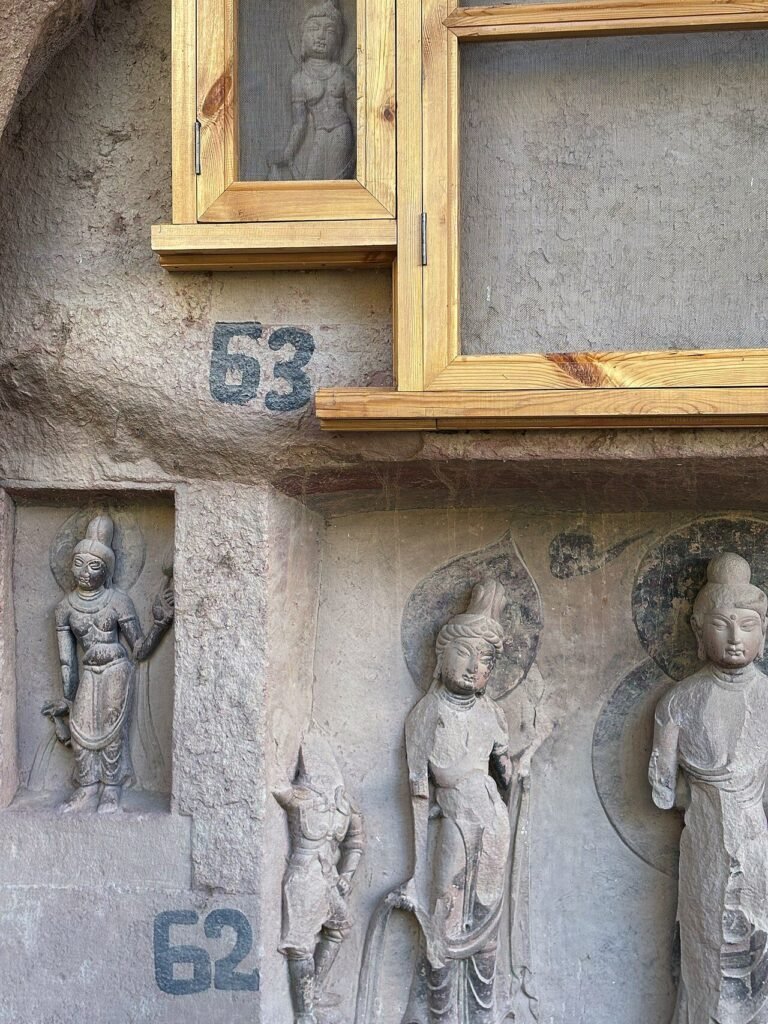
Across the water, the Western Hills are the natural pairing. Take the cable car up from the lakeside near the forest park gate; when I rode it in 2024 the round trip was around 60 to 80 yuan, and you should confirm the current fare because it has moved before. The car lifts you over the trees and out above the lake, which is the one vantage point where Dianchi’s actual scale becomes obvious: from the embankment it looks like a wide river, and from the hills it looks like a sea with a city on its shoulder. At the top, the Dragon Gate (Longmen) is a walkway and gate complex cut into the cliff face by hand, starting in the Qing dynasty in the 1780s and finished by teams of miners over decades. The carving is rough and soot-stained and far more impressive than the photographs suggest. Budget three to four hours for the hills including the cable car queues.
If the weather turns, the Yunnan Provincial Museum near the city center is free, closed on Mondays, and a good half-day on its own. Reserve a slot online with your passport details in advance.
The Siberian gulls, and how to feed them properly
The birds are black-headed gulls, and they breed across Siberia, with large numbers coming from the Lake Baikal region. They reach Dianchi in early November in ones and twos, build to a peak in December and January, and thin out through February, with the last stragglers gone by late March. Tens of thousands winter on the lake, and the counts around Haigeng are the highest because that is where the feeding happens.
A few rules, learned by watching what goes wrong. Buy the official feed bags sold at the park, usually a few yuan, because those vendors are allowed on the embankment and the bread sellers are not. White bread and leftover fried food swell in the birds’ stomachs and do them real harm, so the kindness of tossing them scraps is the exact thing the feed bags exist to prevent. Hold the feed flat on your palm or toss it into the air; the birds will take it without touching you. If you want photographs, come before nine in the morning, when the light is low and the flock is hungriest.
The environmental turnaround, told honestly
Dianchi had a genuinely bad stretch. Through the 1980s and 1990s, runoff from the expanding city, farm fertilizer and untreated sewage fed algae blooms so thick that the water went green and smelled, and the lake’s fishery collapsed. Locals of a certain age will tell you they would not have eaten fish out of it. Government reports from the period held the lake up as the standard example of urban water failure, the kind of problem that money alone had not fixed.
The turnaround took decades and a lot of money. Kunming built and expanded treatment plants, moved industry out of the catchment, restored wetlands along the inflow rivers, and from 2013 pushed Yangtze water into the lake through a diversion channel to break up the blooms. By the mid 2010s the blooms were shrinking year on year, and the water clarity at the Haigeng embankment is now good enough that you can see the bottom in the shallows. The gulls came back in larger numbers as the fish recovered.
I am not going to tell you the lake is pristine, because it is not. It still absorbs the pressure of a city of several million people, and the recovery depends on continued spending. Visit like the place is fragile, because it is. Take your rubbish off the embankment, use the official feed, and you are supporting a recovery you can actually see with your own eyes.
Eating by the lake
The signature lakeside dish is herb-steamed Dianchi carp, and I will be straight with you: it is fine. The fish is freshwater carp, steamed with Yunnan herbs and mint, and it tastes clean and mild, which is the point. A plate runs 80 to 200 yuan per person in the lakeside restaurants near Haigeng, and you are paying for the view as much as the fish. For a better meal at the same money, head back into the city and eat your way through the Kunming food streets instead; our guide to Yunnan food covers the cross-bridge noodles, the wild mushroom hot pots and the goat cheese.
Goat cheese, if you have not met it, is a real thing here. Rushan (乳扇) is a Bai and Yi milk cake, grilled over charcoal until it blisters, then rolled around a stick and dusted with sugar. It costs 5 to 10 yuan a sheet from the path vendors, it tastes like a salty pancake crossed with mozzarella, and it is the best snack on the lake path. Timing matters for mushrooms: the wild season runs roughly June to October and peaks after the summer rains, so if your trip lands there, our piece on Yunnan mushroom season is worth reading before you book a table.
Planning your Kunming days
The mistake is trying to do the lake and the Stone Forest in the same day. They sit in opposite directions and you will spend the whole day in a car. Here is how I would sequence a three-night stay, with prices as they stood when I checked in 2024. Confirm current fares before you book, because park tickets in China move.
| Option | Time needed | Cost | Notes |
|---|---|---|---|
| Dianchi waterfront and Haigeng embankment | Half day | Free entry; bikes 20 to 40 yuan an hour | Gull season November to March; go at sunrise or before sunset |
| Western Hills, cable car and Dragon Gate | Four to five hours | Park entry around 40 yuan; cable car 60 to 80 yuan round trip | Pairs with the lake on the same day if you start early |
| Stone Forest (Shilin) | Full day | Ticket around 130 yuan; about 90 km, 1.5 to 2 hours each way | A separate day; worth it with three nights or more |
| Green Lake, the old town and the university food streets | Two to three hours | Free | Gulls in winter too, plus the best cheap dinner in town |
| Yunnan Provincial Museum | Two to three hours | Free, closed Mondays | Reserve a slot with your passport; the rain plan |
Two nights is tight but workable: one day for the lake and the hills, one day for the Stone Forest. If you have a third, spend it eating, because Kunming is the best food base in Yunnan and the lake will still be there tomorrow.
Quick facts
- Kunming sits at about 1,890 meters; most visitors feel nothing, but it is a stepping stone to higher Yunnan
- Dianchi covers roughly 300 square kilometers at full water, the largest plateau lake in Yunnan
- Gull season runs November to March, peaking December to February
- Haigeng Park entry is free; bike rentals run 20 to 40 yuan an hour
- Taxi from the city center: 40 to 80 yuan, 30 to 50 minutes
- Swimming is not permitted, and water advisories are still posted in summer
- Feed the gulls with the official bags only; bread does them harm
- Provincial museum is free and closed Mondays; book ahead
Frequently asked questions
When is the best time to visit Dianchi Lake?
November to March for the gulls, with December and January the peak. Spring and autumn are pleasant for walking and have fewer people. Summer is warm and green, though the algae risk is highest then even after the cleanup.
How do I get to Dianchi from central Kunming?
Taxi or DiDi to Haigeng Park, 40 to 80 yuan and 30 to 50 minutes. Buses cover the same route for a few yuan in about an hour. The metro reaches parts of the lakeside now, but check the current lines when you arrive.
Can I feed the seagulls, and is it safe for them?
You can feed them, but use the official bags sold at the park. Bread and fried scraps swell in their stomachs, and rangers do hand out fines for feeding the wrong things.
Is the lake clean now?
Much cleaner than a decade ago, after treatment plants, wetland restoration and the Yangtze diversion. It is not pristine, and summer still carries some risk. Treat it as recovering rather than fixed.
Can you swim in Dianchi?
No. Swimming is not permitted and advisories still go up in warm months. If you want to swim in Yunnan, look at Fuxian Lake near Yuxi instead.
How does Dianchi compare with Erhai in Dali?
Erhai is prettier and bigger, with mountains on both sides. Dianchi is easier to reach and has the gulls. Do both if you can; if you only have time for one, choose Dali for scenery and Kunming for convenience.
What should I eat near the lake?
Grilled goat cheese from the path vendors, then cross-bridge noodles back in the city. A full lakeside fish dinner is nice for the view but not the best value; the Kunming food streets beat it at 40 yuan a head.
If Dianchi is your first stop in Yunnan, the natural next moves are the Stone Forest for karst, then Dali and Erhai for the postcard version of a plateau lake, and Lijiang or Shangri-La if you have the time and the altitude tolerance. Book the rail legs in advance around public holidays. And if you would like help turning this into a proper route, send your dates through the contact page and we will sketch one out.
Written by the ChinaTravelFood editorial team.