Dai Temple in a short answer
Dai Temple, called Dai Miao (岱庙) in Chinese, is the imperial temple at the foot of Mount Tai in the city of Tai’an, Shandong province. For two thousand years it was the formal starting point of the climb that emperors made to the sacred peak, the place where they fasted, bathed, and made their offerings before walking up to meet the god of the mountain. When I first walked through its northern gate and found a walled complex of halls and ancient cypresses quieter than the crowds on the mountain above, I realized the temple is a destination in its own right and not just a warm-up for the sunrise hike.
The practical advice is simple. Spend two hours here the afternoon before you climb. See the Tiankuang Hall murals, stand under the thousand-year cypress, and read the imperial steles. Treat the temple as the preface to the Mount Tai sunrise rather than a box to tick. The high-speed line puts Tai’an within easy reach of Beijing and Jinan, and the high-speed rail makes a day or two here simple even if you are not climbing at all.
What Dai Temple actually is
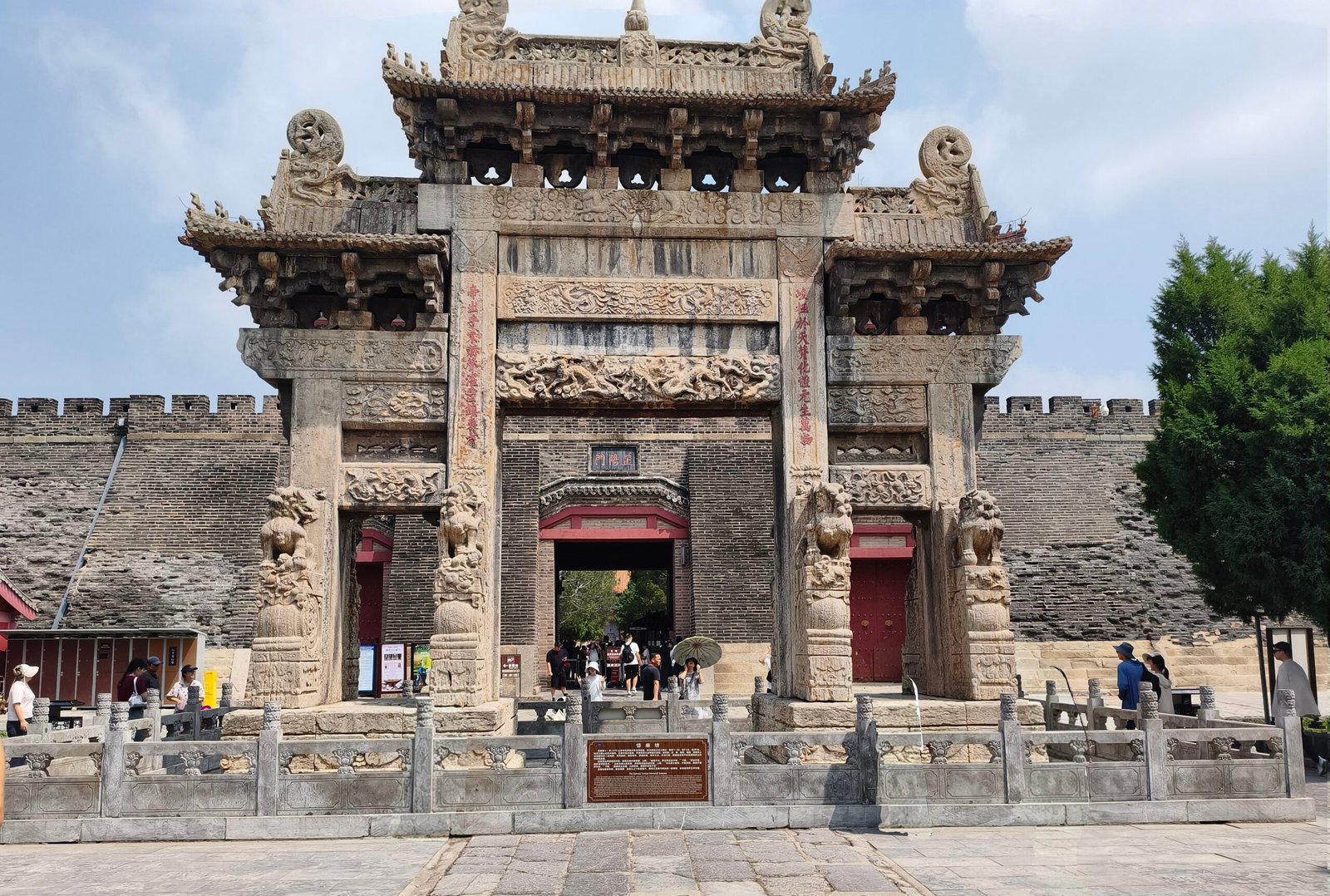
The temple was built to honor the god of Mount Tai, the most sacred of China’s five sacred peaks and, in the old state religion, the mountain that governed birth, death, and the mandate of kings. Emperors came here because to climb Tai was to report to heaven. The site dates in its core to the Han dynasty, but the major halls you walk through today were rebuilt in the Song and Ming periods on the same imperial plan that the palace architects used in the capital. What you are walking is, frankly, a miniature Forbidden City: a south-to-north axis of gates, courtyards, and halls, enclosed by a rectangular wall with corner towers, modeled on the emperor’s own palace in Beijing. Our Forbidden City piece explains the palace grammar you see echoed here in smaller, calmer scale.
The connection to the peak is physical as well as ritual. The central axis of the temple points straight at the mountain, and the climb begins a few hundred meters north at the Red Gate (Hongmen), so the temple and the ascent are one continuous act of approach. I like this detail because it explains the odd feeling you get in the temple: you are already on the mountain, just not yet uphill.
What to see inside the walls
Tiankuang Hall and its murals
The Tiankuang Hall (天贶殿) is the main building, a Song-dynasty structure with a vast painted ceiling and, behind it, a wall of early murals showing the god’s procession and court. The murals are the prize. They are faded but detailed, and they count among the few surviving examples of Song temple painting in the north. Photography is restricted in the hall, which is right, because the pigment is fragile and the light from a thousand phone flashes would finish it. Spend the time looking rather than shooting. I sat on the stone threshold for ten minutes and only then noticed the small figures in the corners of the procession.
The ancient cypresses
The courtyard holds a stand of cypress trees, some planted in the Han era and still standing, with names like the “Parallel Ring Cypress” and the “Minister Cypress” given by later emperors. Trees this old are a rare thing in northern China, where wars and weather cleared most ancient wood, and standing among them is the quiet highlight of the visit. The oldest have stone plaques and a low guardrail, and the shade makes the court a cool retreat in summer. I came in late September and the smell of the resin was the thing I remember most.
The steles and the gates
The temple collects stone steles from successive dynasties, including tall slabs inscribed by emperors who climbed and returned, and the southern gate, the Zhengyang, is the grand entrance that sets the imperial tone. The Chinese etiquette of approaching a sacred site, a low voice and no leaning on the ancient stone, is worth keeping here, because the guards and the locals both notice. There is also a small museum hall off the west side that displays rubbings of steles too worn to read outdoors, worth a look if your interest runs to calligraphy.
Tickets, hours, and the practical bits
Dai Temple is run as part of the Mount Tai scenic area, and your entry is usually folded into the mountain ticket if you buy the combined pass. As of my last visit the standalone temple ticket was around 30 yuan, and the combined mountain-and-temple pass sat near 115 yuan, but prices at state sites shift, so confirm the current number on the official Mount Tai booking platform before you go. The temple opens through the day, roughly 8:00 to 17:30 in the warm months and a little shorter in winter. Arrive early for the best light on the murals and the thinnest crowds. I went at 8:30 on a Wednesday in September and had the main court almost to myself for twenty minutes.
Getting to Tai’an
Tai’an sits between Beijing and Shanghai on the busiest high-speed line in the country, so the train from either is quick: roughly two hours from Beijing South and under two from Jinan, where the Shandong capital’s airport is half an hour north. The temple is a short taxi or bus ride from the station, and the mountain’s lower gate is a walk from the temple’s north wall. I came from Jinan for an overnight, climbed at night to catch the sunrise, and did the temple the next morning, which is the order I would repeat. If you are arriving by the slower conventional train, the station is further out, so budget extra time or just take the high-speed service.
Dai Temple and the climb
Most visitors either skip the temple or rush it, then regret it. The better plan is to walk the temple slowly the afternoon before the climb, so the history is in your head when you start up the steps at midnight or two in the morning. The standard ascent from the Red Gate is a long walk of six to seven thousand steps to the summit, or you can take the tourist bus partway to Middle Gate and a cable car the rest, which the temple’s northern path feeds into. The sunrise from the summit is the goal, and the temple is the proper overture. If you are not climbing, the temple alone is a half-day stop and a good excuse to break a Beijing to Qufu rail journey.
A visit table
| Element | Time | Note |
|---|---|---|
| South gate to Tiankuang | 30 min | Grand axis, imperial steles |
| Tiankuang murals | 20 min | No flash, look close |
| Ancient cypresses | 20 min | Shade, quiet, oldest trees |
| Stele museum (west) | 15 min | Calligraphy rubbings |
| North gate to Red Gate | 10 min walk | Climb starts here |
| Full visit | 2 hours | Afternoon before climb |
When to go
Spring and autumn are the comfortable seasons for both temple and mountain, with clear cool days and good light on the halls. Summer is hot and the climb is a sweat, though the temple shade helps. Winter is cold and the mountain can close in ice, but the temple stays open and the bare trees suit the old stone. Our China festivals calendar notes the lunar dates when the mountain draws the biggest crowds, and the temple fills with them, so pick a plain weekday if you want it to yourself. The week of the lunar Qingming festival and the National Day holiday in early October are the two times I would avoid unless you like company.
Food and rest around the temple
The streets just outside the south gate have a cluster of noodle shops and lamb soup stalls that cater to pilgrims and hikers. I ate a bowl of Tai’an tofu banquet (a local specialty built around the mountain’s soft tofu) at a small restaurant a block east of the gate, and it was cheap and filling before the night climb. There is nothing fancy here, and that is the point: this is fuel, not a destination meal. If you want a proper dinner, the city center ten minutes north has better options, but I would keep the pre-climb meal light.
Quick facts
- What: imperial temple at the foot of Mount Tai, Tai’an, Shandong.
- Age: core Han dynasty, halls rebuilt in Song and Ming.
- See: Tiankuang murals, ancient cypresses, imperial steles, stele museum.
- Plan: two hours the afternoon before the climb.
- Reach: high-speed rail from Beijing, Jinan, Shanghai.
- Role: the formal start of the sacred ascent.
- Quiet: weekdays, off-peak months; arrive at opening.
- Ticket: combined with Mount Tai pass; confirm current price online.
Frequently asked questions
Do I need to see the temple if I am climbing the mountain?
You do not need to, but you should. The climb makes more sense once you understand the god and the rite, and the temple is the calm before the crowded steps. Two hours is enough.
How much time should I budget?
About two hours at a relaxed pace covers the axis, the murals, the trees, and the small stele museum. Rush it in forty minutes and you miss the point, which is the age and the quiet.
Is it like the Forbidden City?
In grammar, yes: a walled axis of halls on the imperial plan, a deliberate echo of the palace. In scale, no, it is a fraction the size, and you can walk it without the Beijing crowds.
Can I visit the temple without climbing Tai?
Easily. Many travelers do the temple as a half-day stop between Jinan and Qufu, and never set foot on the mountain. The temple stands alone as a site.
What are the opening hours and ticket price?
The temple opens roughly 8:00 to 17:30, shorter in winter. It is usually included in the Mount Tai combined pass; a standalone ticket ran around 30 yuan at my last check. Confirm both on the official platform, because northern sites shift with the light and the season.
Is it accessible for those who cannot climb?
The temple is flat and walkable, a good option for travelers who skip the mountain itself. The paths are even, though the stone can be uneven, so sturdy shoes help.
What should I not do?
Do not lean on the steles, do not use flash in the hall, and do not climb the cypress rails. The guards are polite but firm, and the respect is part of the place.
Making Dai Temple part of a Shandong route
Dai Temple works best as the cultural half of a Tai’an stop, the quiet preface to the sunrise climb, and it pairs naturally with Jinan and Qufu for a Confucian-and-sacred loop. If you want the train timing, the temple hours, and the night-climb plan sequenced so you reach the summit for first light, send us your dates through the contact page and we will sketch a custom food-and-travel itinerary. The gate opens early, and so should you.
Written by the ChinaTravelFood editorial team.