What butter tea actually is
Short answer: strong brick tea, yak butter, and salt, churned into a hot emulsion that tastes like a thin salty soup with the mouthfeel of cream. It is called 酥油茶 (su you cha) in Chinese and cha süma in Tibetan, and it is the single most Tibetan thing you can put in your mouth. Travellers either take to it immediately or never do, and I was firmly in the second group for about four days.
Then I was standing outside the guesthouse at Rongbuk at around 5,000 metres, at six in the morning, in a wind coming off the north face of Everest, and a woman handed me a thermos cup of it. Cold, dehydrated, and slightly nauseous, I drank it and understood the entire dish in one mouthful. That is the thing about butter tea: it makes very little sense in Lhasa and complete sense at altitude in the dark.
How it is made, and why the method matters
The base is brick tea (砖茶), a compressed cake of dark, heavily oxidised leaf from Sichuan or Yunnan, the same material that used to travel by yak caravan across the plateau as a kind of currency. It is boiled hard, often for a long time, into a concentrate called 茶卤 that is kept in a pot or jar for days. That concentrate, hot water, salt, and a lump of yak butter go into a tall wooden churn called a dongmo, and are plunged up and down until the fat emulsifies.
Modern kitchens use a blender. The result is similar: opaque, beige, with a slick of butter on top. It is served hot and it is served constantly. The host’s job in a Tibetan household is to keep your cup full, and the cup is small for that reason.
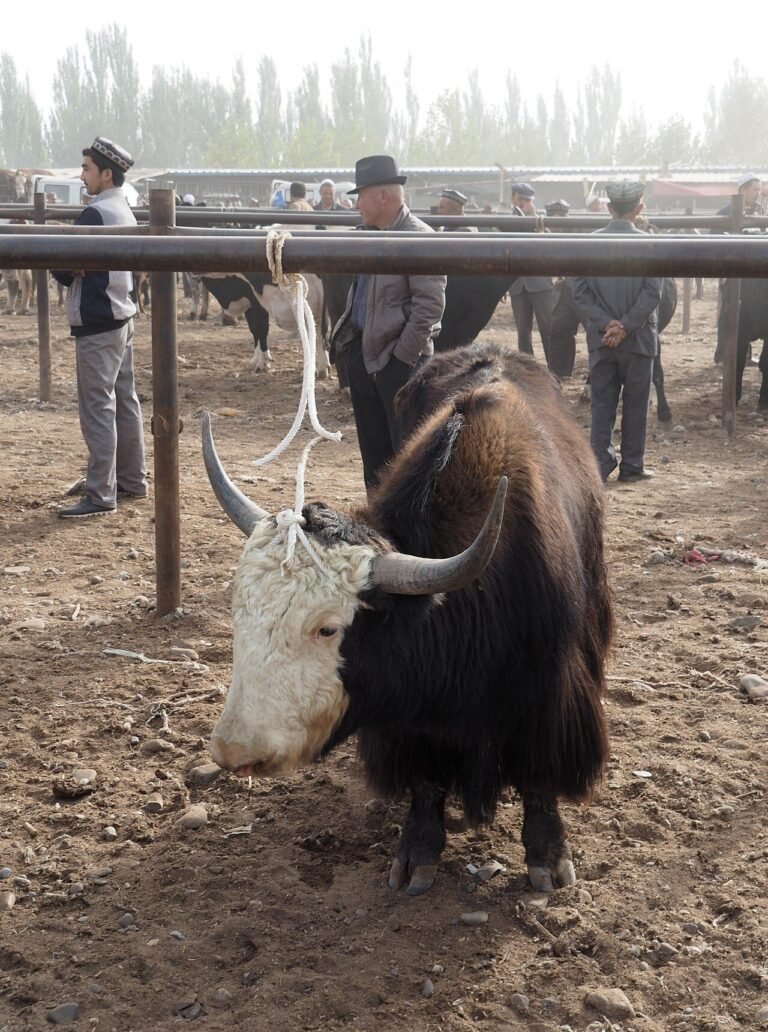
Yak butter is not cow butter. It is sharper, more yellow, and more animal on the nose, made in summer from milk that is cultured first. If you find the aroma challenging, you are not wrong, and you are also not the first.
The salt is not optional and it is not a mistake. On the plateau you are losing water through dry air and hard breathing, and the combination of salt, fat, and warmth is a delivery system for all three. For general background on the rest of the plateau kitchen, see Tibetan food.
Lhasa: where to drink it and how to order
Lhasa at 3,650 metres is where you acclimatise, and it is also where you can try butter tea under the least pressure. The city has two parallel tea cultures and knowing the difference saves you from a disagreeable first impression.
Butter tea is what families and pilgrims drink. It is served in small cups, in teahouses around the Barkhor circuit and inside monastery kitchens, and it is the drink that gets poured for you in a home.
Sweet tea (甜茶, tian cha) is the other one: black tea, milk powder, and sugar, closer to a very thin British-style tea, sold by the glass or by the pot in bright, noisy teahouses all over the city. It is what Lhasa residents drink in the afternoon, it costs a few yuan, and every foreigner likes it. Start here. There is no shame in it, and the teahouses are one of the best places in Tibet to sit for an hour and watch the city go by.
Ordering is not complicated. In a sweet tea house you point at the size of thermos or pot you want. For butter tea you will usually be offered a cup, and the correct move is to drink it and let the cup be refilled. If you want to stop, leave the cup full rather than empty. Do not drain it and set it down expecting to be done, because it will come back full again.
Around the Barkhor, the circuit that pilgrims walk clockwise around the Jokhang Temple, the tea houses above the street are the classic spot: plastic stools, a view down onto the prostrating pilgrims, and a thermos of butter tea for somewhere around 15 to 30 yuan.
Monastery tea at Sera and Drepung
The two great monasteries on the edge of Lhasa are where butter tea is made at a scale you will not see anywhere else, and both are open to visitors.
Sera, on the north side, is famous for the debating courtyard where monks argue doctrine in the afternoon with a clap and a stamp, but the kitchen is the part I send people to. Monasteries brew enormous quantities for the assembly hall, and the tea is distributed during sessions. Ask politely and you will usually be shown the vats.
Drepung, on the western hillside, was once home to thousands of monks and still functions as a working institution. Its kitchen scale is the reason people describe monastery butter tea as having a different, richer character than household tea: it is made in batches of hundreds of litres.
Practical note for both: go in the morning, take a guide who can explain what you are looking at, and ask before photographing anything involving people. Respect the clockwise direction of circumambulation around stupas and halls. Do not step on thresholds.
The route: Lhasa to Everest Base Camp
This is the classic western route, the one everyone means when they say the butter tea road, because the drink changes as you climb. In Lhasa it is a cultural experience. By Tingri it is fuel.
| Stop | Altitude | What you drink and eat | Note |
|---|---|---|---|
| Lhasa | 3,650 m | Sweet tea in the teahouses, butter tea around the Barkhor | Acclimatise two to three days before going higher |
| Yamdrok Lake | 4,441 m | Butter tea and tsampa at the pass viewpoint | First real climb on the road; the pass above the lake is higher |
| Gyantse | 3,950 m | Butter tea, barley beer, and a proper Tibetan meal | Pelkor Chode monastery and the Kumbum stupa, worth a night |
| Shigatse | 3,840 m | Tashilhunpo monastery kitchens, and the best food on the route | Regional capital; a good place to sleep at altitude |
| Tingri | 4,300 m | Butter tea and noodle soup in truck-stop canteens | Basic lodging; this is where the road gets rough |
| Rongbuk Monastery | 4,980 m | Butter tea at the monastery guesthouse | Highest monastery in the region, and the base for the summit view |
| Everest Base Camp | 5,200 m | Whatever is in the thermos | Bring your own; the tent teahouses are seasonal |
The pattern is the point. As the road climbs, the food gets simpler and the tea gets more central, and by the last stretch a cup of hot salty butter is doing real physiological work rather than cultural work.
Above Shigatse you cross the Tsola and Gyatso La passes, both above 5,000 metres, and my honest advice is to keep drinking, keep eating even when you do not feel like it, and plan a descent to sleep. Sleeping high is what causes trouble, not visiting high.
The northern alternative: Namtso
If the Everest road is too long, the northern route to Namtso is the shorter and, in my view, more beautiful option. The lake sits at about 4,718 metres, which makes it one of the highest large salt lakes in the world, and the drive from Lhasa crosses the Largen La pass at around 5,190 metres.
The butter tea version here is the nomad version. On the grassland around the lake you will find tent encampments where families sell cups of tea and bowls of yoghurt, keep sheep and yaks, and in summer move camp. It is the most direct encounter with the pastoral culture that produced the drink, and it is also the coldest place you will drink it, because the wind off that water at dawn is serious.
The trade-off with Namtso: it can be done as a long day trip or an overnight, but sleeping at 4,700 metres on your first night on the plateau is a bad idea. Do it after Lhasa and Shigatse have given you some altitude conditioning.
Tsampa and what comes with the cup
Butter tea is rarely drunk alone. The partner is tsampa (糌粑), roasted highland barley flour, which you eat by putting a spoonful in a bowl, adding butter tea, dried cheese curd, and sometimes sugar, and kneading it with your fingers into a stiff dough.
Eating it properly takes practice. The first attempt usually ends with flour on your sleeve. The trick is to knead against the side of the bowl rather than in the middle, and to add liquid slowly. It is filling, it is mild, it is genuinely good, and it is what carried people across this plateau for centuries before there were roads.
Other things that arrive with tea: dried yak meat, momo dumplings, 藏面 Tibetan noodles in a thin broth, and butter-and-sugar confections made for festivals. The broader picture is in Lhasa food.
Permits, altitude, and what the trip costs
Two things will decide whether this trip happens at all.
First, the paperwork. Foreign visitors need a Tibet Travel Permit, and as of 2026 travel in the region is generally arranged through a licensed agency with a guide and vehicle rather than done independently. The rules have been tightened and relaxed repeatedly over the years and I am not going to pretend to know what they will be on your travel date. Read Tibet permits and confirm the current position with your agency and with Chinese official sources before you book anything non-refundable.
Second, altitude. Lhasa at 3,650 metres is enough to give a lot of people a headache and a bad first night. Everest Base Camp at 5,200 metres is a different category. Acclimatise in Lhasa for two to three days before going higher, drink far more water than feels necessary, avoid alcohol early on, and read altitude sickness before you go rather than after you arrive.
On budget: the two or three days in Lhasa are cheap, with teahouses costing a few yuan a cup and simple restaurants well under 50 yuan a head. The route itself is not, because a guided vehicle and driver with the required permits is the unavoidable line item. That structure is why most visitors book the whole western route as one package.
Quick facts
- Butter tea is brick tea concentrate, yak butter, and salt, churned into a hot emulsion.
- Sweet tea, made with milk and sugar, is what Lhasa residents drink daily and is the easier starting point.
- Lhasa sits at 3,650 metres; Everest Base Camp is at 5,200 metres; Namtso at 4,718 metres.
- A thermos of butter tea around the Barkhor costs roughly 15 to 30 yuan.
- Leave your cup full when you have had enough, not empty.
- Tsampa, roasted barley flour kneaded with tea, is the food that goes with it.
- Foreign visitors need a Tibet Travel Permit arranged through a licensed agency. Confirm the 2026 rules before booking.
- Walk clockwise around stupas and monastery halls.
Frequently asked questions
Does butter tea taste good?
To most visitors, no, at least not the first time. It is salty, oily, and smells strongly of yak. I would suggest trying it three times, in three different places, before deciding. The third cup, in the cold, at altitude, is where it usually clicks.
Is it safe to drink?
Yes. The tea is boiled and the butter is cultured, and the emulsion is served hot. The risk for a traveller is not the tea, it is the yak yoghurt and any raw meat dishes that come alongside it, plus general water safety. Butter tea is one of the safer things you will be handed.
Can I get a vegetarian version?
Not really. Yak butter is the defining ingredient. Travel agencies can request vegetable-oil tea at some guesthouses and a few places will make it, but on the nomad grasslands and in monastery kitchens, butter is it.
Where can I buy butter tea to take home?
You buy the brick tea, not the drink. Around the Barkhor and at the markets in Lhasa you will find compressed cakes of dark brick tea for tens of yuan, and those travel well. Yak butter does not travel at all in a suitcase.
What is the difference between butter tea and Mongolian or Xinjiang milk tea?
Similar family, different ingredients. Butter tea uses yak butter and no sugar; the milk teas of Xinjiang and Inner Mongolia usually use cow or camel milk with salt, and sometimes fried millet. The plateau version is fattier and more intensely animal.
Do I need to finish every cup I am given?
No. Being served repeatedly is the hospitality, and being seen to accept it is the courtesy. Drink what you can, leave the cup full when you want to stop, and do not make a face at the first sip if you can help it.
Can I visit Sera and Drepung without a guide?
You can enter both, but you will be admitted as part of a permitted group in practice, and a guide is what turns a set of dark halls into something you understand. The debating courtyard at Sera runs on weekday afternoons and closes without notice.
How long does the Everest route take?
Four to six days from Lhasa and back is typical, with nights in Gyantse or Shigatse and a night near Rongbuk. Add two or three days in Lhasa first for acclimatisation. Anything faster than that and you are racing altitude, which is a race you lose.
Is the road sealed?
Most of the Friendship Highway to Shigatse and beyond is paved and in decent condition. The final stretch to Rongbuk and base camp is rougher. Expect long days, checkpoint stops where your documents are checked, and a guide handling all of that for you.
Plan a plateau route
The butter tea road is one of the few trips in China where the food and the geography are the same story. If you want a route that matches the altitude to your pace and puts the right teahouses on the right days, tell us your dates on our contact page and we will build a custom food-and-travel plan for you.
Written by the ChinaTravelFood editorial team.