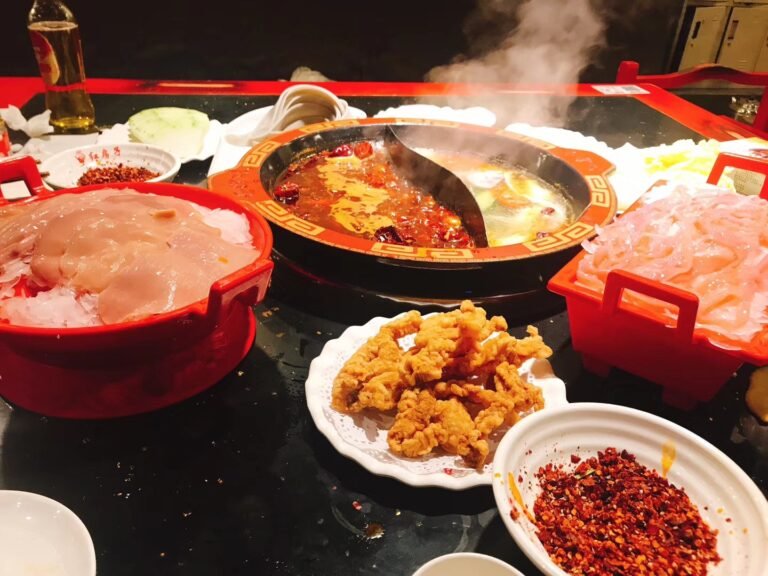
The first menu I tried to read in China was in a Chengdu noodle shop, and I ordered something described by a single character I did not know. It turned out to be pig brain. It was good, but the panic taught me a system. Reading a Chinese menu without speaking the language is a skill you can learn in an afternoon, and it turns every meal from a gamble into a choice. This guide gives you the characters, the categories, and the traps.
How a Chinese menu is organized
Unlike a Western menu that runs starter-to-dessert, a Chinese menu groups by cooking method and ingredient. You will see sections for “chao” (stir-fried), “zheng” (steamed), “tang” (soup), “liang” (cold dishes), and “zhu” (braised). Learn those five headers and you can navigate most places. The order-in-a-restaurant guide builds on this with the pacing of a proper meal.
The characters worth memorizing
You do not need to read everything. A short list covers most of the menu.
| Character | Pinyin | Meaning |
|---|---|---|
| 炒 | chao | stir-fried |
| 蒸 | zheng | steamed |
| 汤 | tang | soup |
| 辣 | la | spicy |
| 鱼 | yu | fish |
| 肉 | rou | meat (often pork) |
| 鸡 | ji | chicken |
| 牛 | niu | beef |
Combine them: “yu xiang rou si” is fish-fragrant pork shreds, a dish with no fish despite the name. I learned to spot “yu xiang” as a flavor profile, not an ingredient, the hard way.
Watch the “fish-fragrant” trap
Several dishes named for one thing contain another. “Gong bao” is chicken with peanuts, “ma po” is tofu with beef, and “hong shao” is braised in soy and sugar. The dim sum guide lists the Cantonese names you will meet at brunch, which use different characters but the same logic of label-equals-method.
Photos, numbers, and pointing
Most urban menus now have photos and a number next to each dish. You can point at the picture and say the number to the waiter; no language needed. I still read the characters to avoid the “photo looks like chicken, is actually frog” moment. When in doubt, the dumplings entry shows the jiaozi character so you can find it on any menu.
Allergens and the pork problem
Pork is the default meat and lard shows up in broth and dough. If you avoid it, learn “zhu rou” (pork) and “fei” (fat), and tell the staff “wo bu chi zhu rou”. A separate food safety guide covers how to phrase restrictions and what cross-contamination to expect at mixed kitchens. Vegetarians should also learn “su” (vegetable-only) and confirm no meat stock.
Reading a banquet menu
A banquet menu lists courses in order and often in poetic names that hide the dish. “Buddha jumps over the wall” is a seafood broth; “ants climbing a tree” is glass noodles with minced meat. The banquet etiquette piece explains the seating and toast sequence, but for reading, ask the host to translate the poetic names or you will be guessing all night.
Street menus are simpler
Street stalls and noodle shops use short menus with one or two characters per item. The street food overview notes that a single character like “mian” (noodles) or “fan” (rice rolls) is often the whole order. I order street food by pointing and holding up fingers, which works even when the script is beyond me.
The time a character saved my dinner
In a Wuhan noodle shop I almost ordered “niu nao” thinking it was beef, because “niu” is beef and the second character looked harmless. A local at the next stool laughed and pointed at the character for brain. I swapped to “niu rou” (beef) and avoided the offal. That moment is why I bother learning the script instead of guessing from photos. One character changes the protein, and the photo often will not tell you.
The same trap bit me with “ji zong” (chicken gizzard) versus “ji rou” (chicken meat) in a Guizhou town. The dishes sat side by side with near-identical pictures. Knowing “zong” meant gizzard saved a chewy surprise. I now read at least the protein character before pointing, even when a photo is there.
Reading regional menus
Menus shift by region and so should your character list. In Sichuan you need “ma” (numb) and “la” (spicy) to gauge heat; in Guangdong you need “qing” (clear-steamed) and “tang” to find the light dishes; in Xinjiang you need “kao” (roasted) and “naan” for the bread. The street food overview notes that the farther west you go, the more the menu turns to grill and flatbread, and the characters follow.
I keep a small note on my phone with the characters for the regions I am visiting, sorted by what I avoid. For a Yunnan trip I added “jun” (mushroom) and “hua” (flower), because both show up in dishes that look like vegetables but taste like the forest. The effort takes ten minutes per region and removes most bad surprises at the table.
The banquet menu and its poetic names
A banquet menu is where reading fails you entirely, because the dishes carry poetic names that hide the food. “Buddha jumps over the wall” is a seafood and broth medley, “ants climbing a tree” is glass noodles with minced meat, and “lion’s head” is a large pork meatball, not a cat. I learned these the hard way at a wedding in Hangzhou where I pointed at “phoenix dancing” and got a whole fish I had to face down with chopsticks. The names are courtship, not description, and you need the host or a translation app to decode them.
The banquet also runs in a fixed order: cold dishes first, then soups, then the main meats, then a vegetable, then rice and fruit. The banquet etiquette piece covers the seating and toasts, but for reading, ask the host to translate the poetic names before the plates land, or you will be guessing all night and missing the point of half the courses. A phone camera on the Chinese menu, run through a translate app later, is my backup when the host is busy toasting.
Apps that read the menu for you
When the characters beat me, I point my phone camera at the menu and let a translate app render it live. The results are rough, the app often misreads a stylized font, but it catches the protein and the method well enough to avoid surprises. I pair the app with the character list I keep on a note, so the app confirms what I suspect. The translation apps guide covers which ones work in China without a VPN; I load one before landing and practice on a menu photo at the airport.
One last tip on the number system
Most menus pair each dish with a number, and learning to say the number aloud is the fastest way to order without reading a character. I memorize the sounds for one through ten and then just read the digits off the page; the waiter matches the number to the kitchen ticket. This bypasses the script entirely for ordering, leaving the characters useful only for curiosity and allergy checks. For a nervous first dinner, number-plus-point beats character-reading every time, and it is the method I fall back on in a crowded, noisy room.
Quick facts
- Menus group by method (fried, steamed, soup), not course order.
- Learn 8-10 characters and you can read most of any menu.
- “Yu xiang” and “gong bao” are flavors, not the main ingredient.
- Pork is the default; say “bu chi zhu rou” to avoid it.
- Photos plus a dish number beat guessing every time.
Frequently asked questions
Do I need to learn to speak Chinese to order?
No. Point at photos, say the dish number, or use a translation app. Reading a few characters just reduces surprises and helps at stalls without pictures.
What does “yu xiang” mean if there is no fish?
It is a sweet-sour-spicy flavor built on pickled chili and garlic, originally for fish. On pork or eggplant it means the sauce, not the protein.
How do I avoid pork without offending?
Say “wo chi su” (I eat vegetarian) or “bu chi zhu rou” clearly, and repeat it when the food arrives. Most kitchens accommodate; some cannot separate the stock.
Are the English menu translations reliable?
Often not. “Saliva chicken” is a real dish (cold poached chicken in chili oil), and “husband and wife lung slices” is beef offal in sauce. The literal translations amuse but mislead; match the Chinese character when you can.
What if there are no photos and no English?
Look for the method characters and the protein characters, or use your phone camera with a translate app. Failing that, point at what a neighboring table is eating.
How do I tell spicy from numb?
“La” is chili heat; “ma” is the tingle of Sichuan peppercorn. A dish marked “ma la” is both. Ask for “wei la” (slightly spicy) if you want a gentle version.
Is it rude to customize a dish?
Less than you think. Asking for less oil or no chili is fine at a casual spot. At a refined restaurant, order to your tolerance at the start rather than sending food back.
If you want a menu-reading cheat sheet matched to the region you are visiting, reach us through the contact page and we will send the character list that matters there.
Written by the ChinaTravelFood editorial team.